
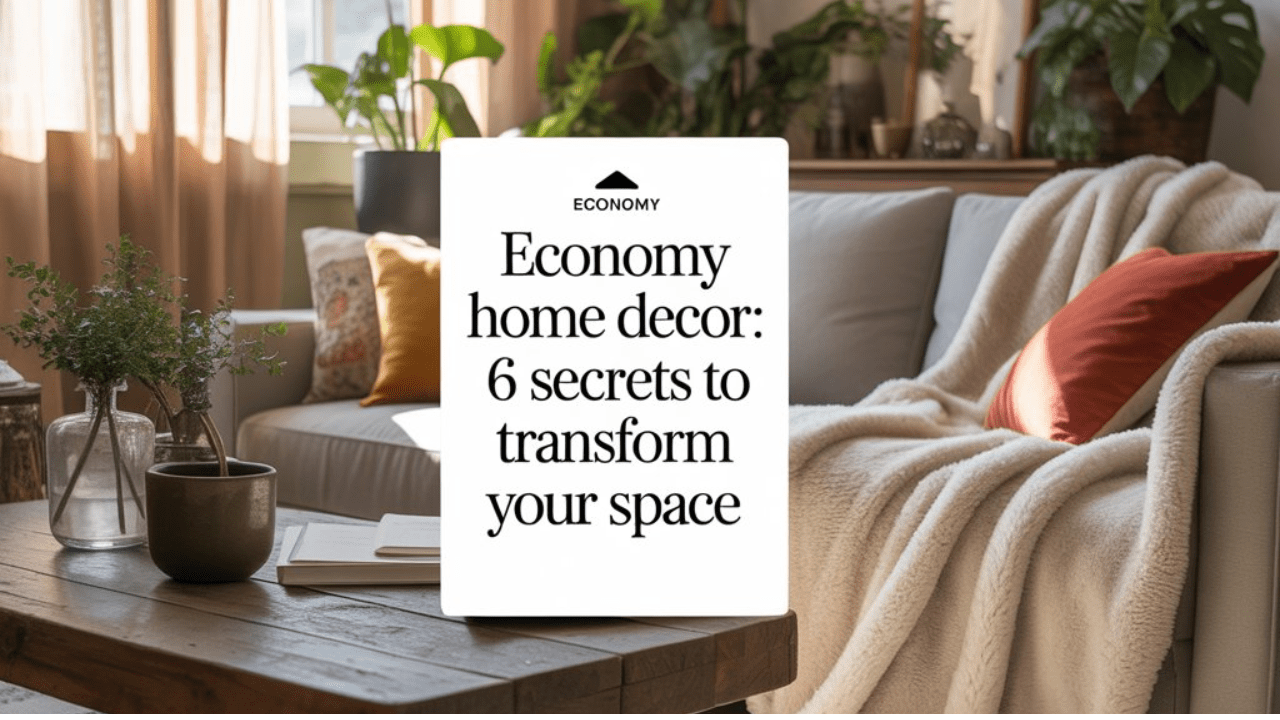
In today’s fast-paced world, finding a balance between style, affordability, and sustainability is more important than ever. For many households in the United States, economy home decor has become the perfect solution for those who want beautiful spaces without overspending. Whether it’s upcycling, DIY projects, or sourcing budget-friendly furniture, the trend is reshaping how people think about interior design. By embracing this approach, homeowners and renters alike can create stunning, functional spaces while keeping financial stability in mind.
The Rise of Economy Home Decor
The increasing popularity of economy home decor is no coincidence. As inflation, rent hikes, and lifestyle changes shape consumer behavior, people are turning toward cost-conscious solutions. According to research published in the Journal of Consumer Studies, affordability is now a major factor in home-related purchases, especially for younger demographics such as millennials and Gen Z.
Minimalism and practicality are also driving forces. A living room doesn’t need to feature luxury pieces to feel inviting. Instead, the careful selection of budget-friendly yet stylish items creates a sense of harmony and warmth without breaking the bank.
Strategies for Affordable and Stylish Interiors
DIY and Upcycling
One of the most effective methods to embrace economy home decor is through do-it-yourself projects. From repurposing old shelves into decorative storage solutions to painting and refurbishing furniture, upcycling is both cost-effective and environmentally friendly.
DIY culture has grown rapidly with the help of social media platforms like TikTok and Pinterest, where creators share step-by-step guides. The process not only reduces waste but also allows homeowners to inject their personal style into each piece.
Affordable Retail Alternatives
Budget-friendly home goods retailers like IKEA, Target, and Walmart are cornerstones of affordable design. Their wide product ranges prove that functionality and beauty don’t have to come with high price tags. Additionally, online platforms like Wayfair and Overstock give access to stylish furniture and decor at discounted rates.
Incorporating Nature
Plants have become one of the most accessible and affordable ways to beautify a home. Greenery improves air quality, adds a natural aesthetic, and is far more affordable compared to high-end decorative items.
Expert Insight on Budget-Friendly Design
Interior design professionals have long highlighted the balance between creativity and affordability. “Good design isn’t about how much you spend, but how well you use your resources,” says Dr. Linda Mason, a design scholar from the Journal of Interior Design. This perspective underscores how accessible and thoughtful design choices can transform living spaces into warm, personalized homes.
The Role of Sustainability in Economy Decor
Another powerful trend shaping the market is sustainability. Consumers are becoming increasingly eco-conscious, leading them to repurpose, recycle, and reduce consumption. In this way, economy home decor aligns perfectly with eco-friendly living.
Second-hand shops, flea markets, and online resale platforms such as Facebook Marketplace or Craigslist are prime examples of how people can furnish homes at a fraction of the cost while supporting a circular economy.
Research in the Journal of Environmental Psychology shows that sustainable consumer choices, such as reusing and recycling, are directly linked to higher well-being and satisfaction in household settings. This means that saving money while making sustainable choices also contributes to overall happiness.
Blending Functionality and Aesthetics
What makes economy decor truly successful is its ability to blend function with beauty. For instance, multi-functional furniture like sofa beds, foldable desks, or storage ottomans allow small spaces to feel more spacious and organized. These practical pieces not only save money by replacing multiple furniture items but also enhance daily living.
Color palettes also play a key role. Neutral tones, when paired with accent colors from throw pillows or small art pieces, can create a high-end feel without the price tag. With a thoughtful eye, even the simplest room can appear sophisticated.
Economy Home Decor in Different Living Spaces
- Living Rooms: Opt for modular seating, second-hand coffee tables, and accent rugs.
- Bedrooms: Repurpose headboards, use affordable lighting, and decorate with minimalistic bedding.
- Kitchens: Open shelving and creative storage maximize both functionality and beauty.
- Outdoor Spaces: Repurposed pallets and string lighting turn patios into cozy retreats.
This demonstrates how economy home decor is not limited to one area of the house but can be applied throughout, making every space both affordable and stylish.
Technology and Online Inspiration
Technology has played a significant role in democratizing interior design. With apps and platforms offering augmented reality tools, consumers can now preview how affordable pieces will look in their homes. Furthermore, interior design blogs and YouTube channels are packed with tutorials showcasing how to achieve professional-looking results without spending excessively.
Conclusion
At its heart, economy home decor is more than just a design trend—it’s a lifestyle choice that blends financial mindfulness, creativity, and sustainability. It reflects the growing need for individuals to live comfortably and stylishly while adapting to economic realities.
As Dr. Mason emphasized, true design isn’t measured by dollars spent but by the vision and resourcefulness behind it. By embracing budget-friendly strategies such as DIY projects, second-hand shopping, and multi-functional furniture, anyone can transform their living spaces into inspiring environments that feel uniquely their own.
In a world where financial stability and self-expression are equally important, economy home decor represents the future of design: smart, stylish, and sustainable.




Pingback: Wasserrutschen Frisur: Tipps für perfekten Halt - FASHIONABLE STYLE